Squares/Roots using Area

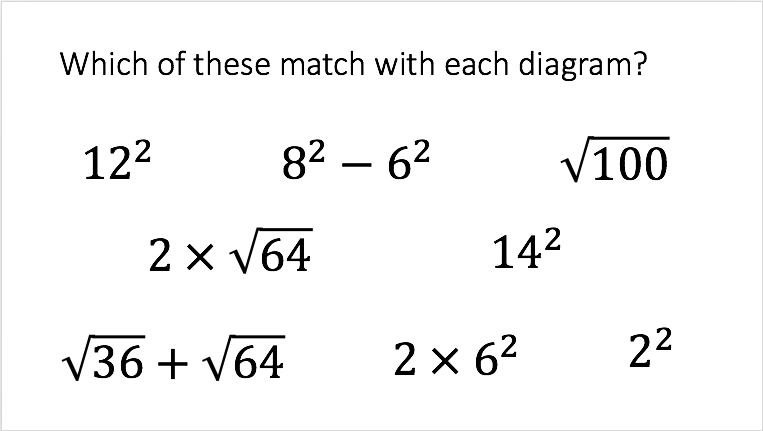
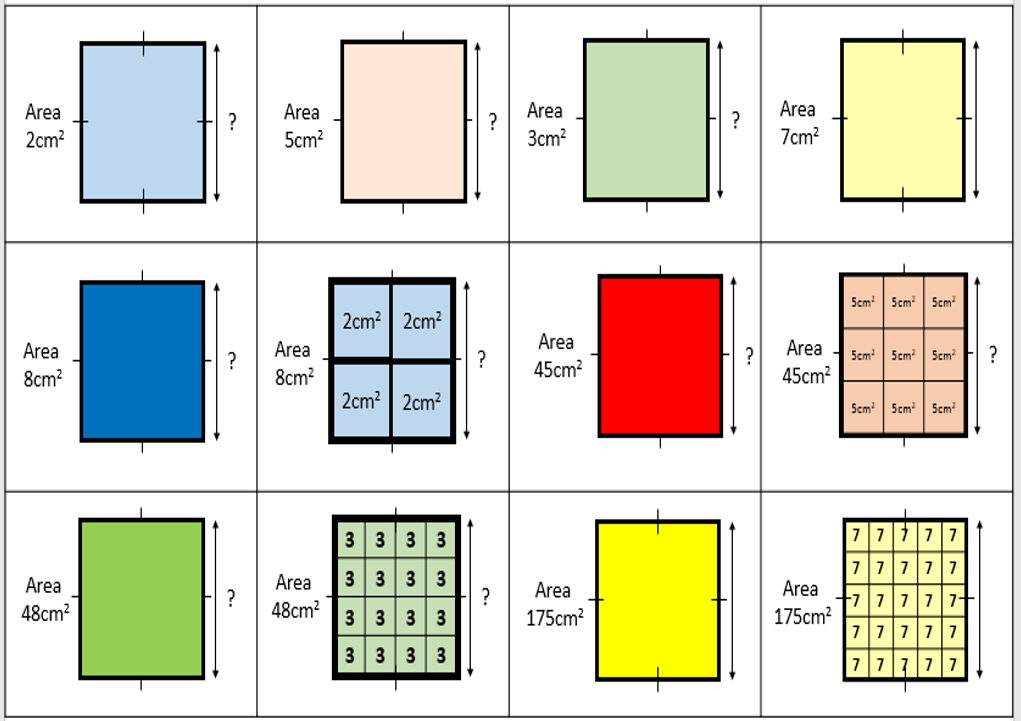
I was in a lesson recently where a teacher used inverse to find square roots. They had calculated 3² as 9 so they used that fact to do the square root, but when a student got stuck with a question I noticed that they had previously looked at area of squares and rectangles so I reminded the student of finding the area of the square to help him find the square number/area and that the root was like the length of the side of a square if you know the area. This isn’t new and i have used this idea before, but the worksheet i made below was a response to the questions the students were given in that class. They weren’t just given 3² or find the √9. They were given 2 x 3² or √49 + √81.

I started to think of the area model again and how it would help students to solve those types of problems. Instead of 2 x 3² = 6², They could see that it was 2 squares of length 3 and not a square of length 6. Also, the shapes wold show that 8² – 6² wasn’t equal to 2².

Here is a copy of the ppt

Area Square Root

Screen Shot 2018-10-20 at 15.56.32

Screen Shot 2018-10-20 at 15.56.40

I have had a thought on how i could extend this to surds

serds

Area Square Root Surds

Loci and Area

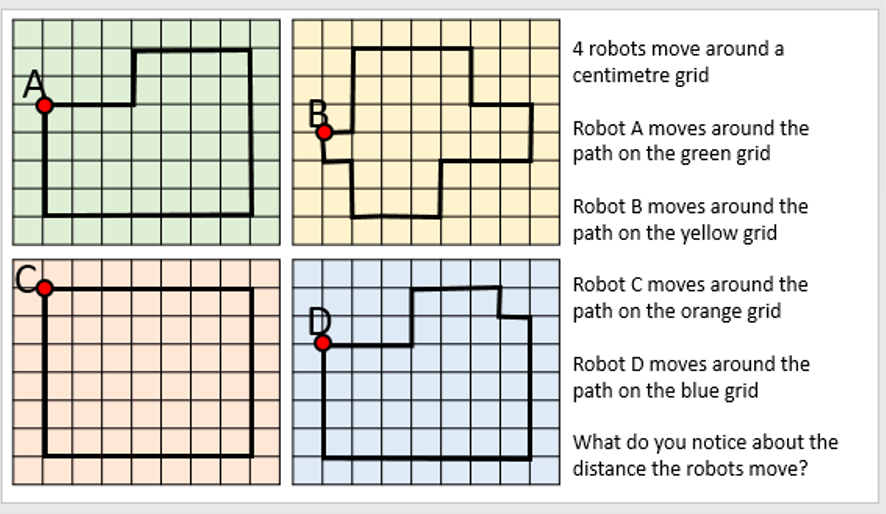
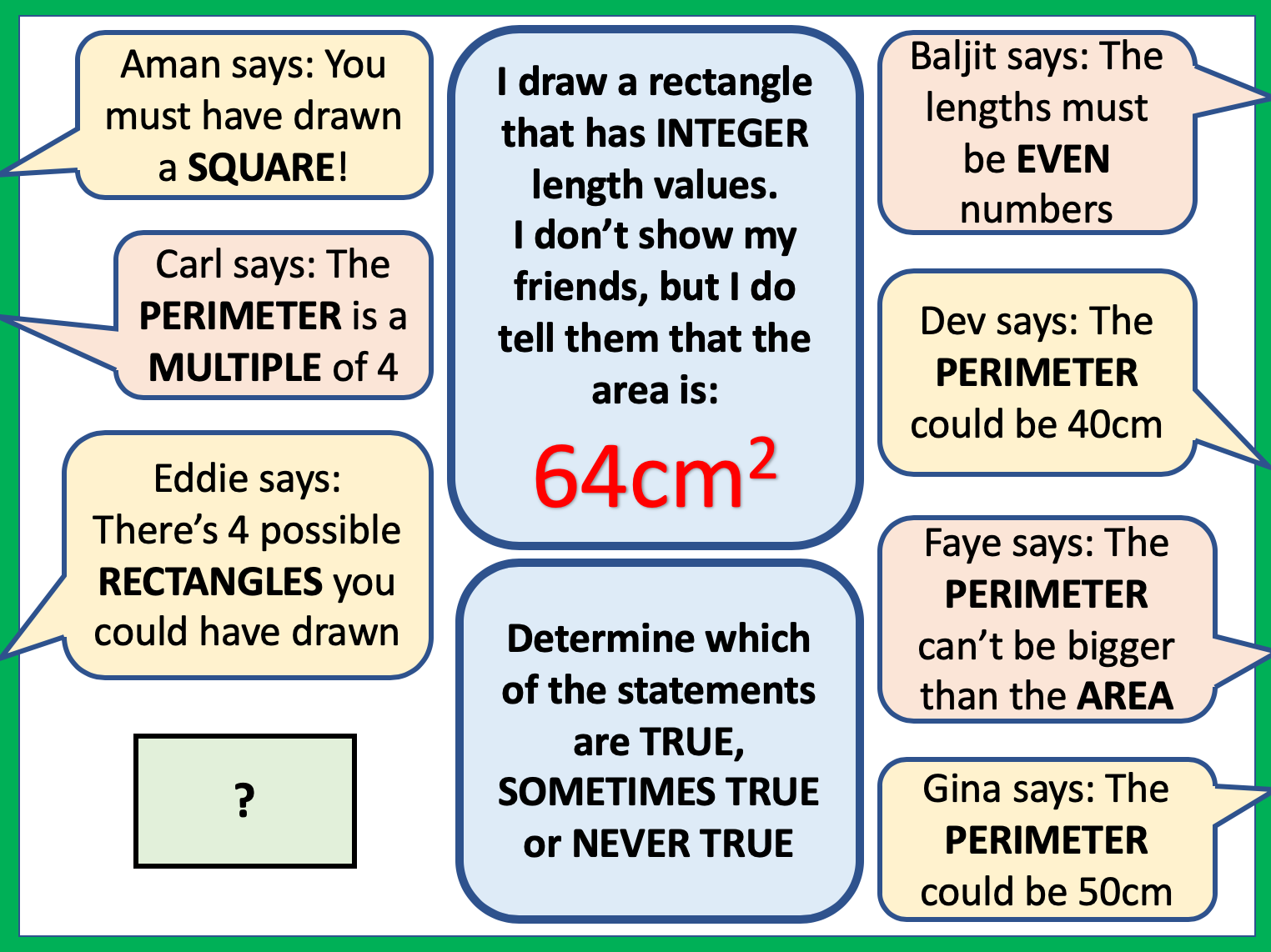
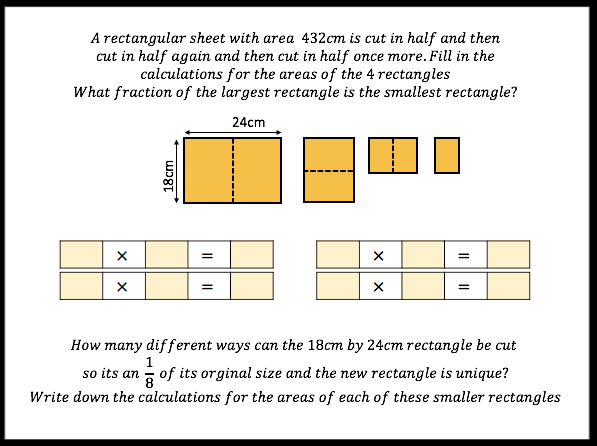
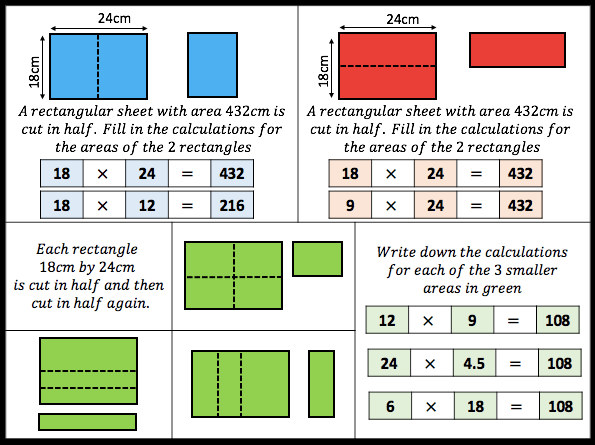
The way the SOW is written can often see topics placed closely in different combinations. EG in year 8 I saw that Perimeter, Area, Volume and Surface Area are next to Factors, Multiples, LCM, HCF, PFF and Indices. So when looking at what lengths a rectangle of Area 24cm squared might have, you naturally remind students of factors. When looking at area of a square, you link square numbers and roots and the same with volume.

In year 10 we teach Area and circumference of circles, sectors and arcs. We also teach construction and Loci in the same module.

Yes, I realise it may be obvious but having that understanding of the circle; names for the parts (radius, diameter) and also how to find the area and circumference has made construction and Loci easier to tackle. It’s also helped to reinforce Area and Circumference.

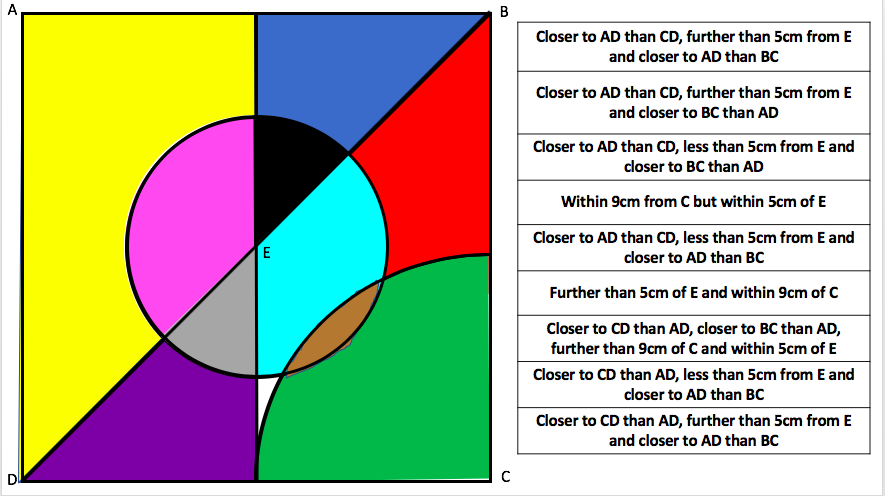
so this resource looks at the two

i also wanted a resource where students could write statements based on different combinations of colours.

How would we describe the points that lie in grey or purple?

this task put the emphasis on the description of points that satisfy a rule rather than the construction
Screen Shot 2018-10-06 at 22.01.45

https://babbey-my.sharepoint.com/:p:/g/personal/konstantineh_barkingabbeyschool_co_uk/EU6eNNeNnnVCikihHHYpaPkB3IySsQnDgOhXjN8PDmDm2w?e=cZekAe
 

Circumference and Area of a Circle

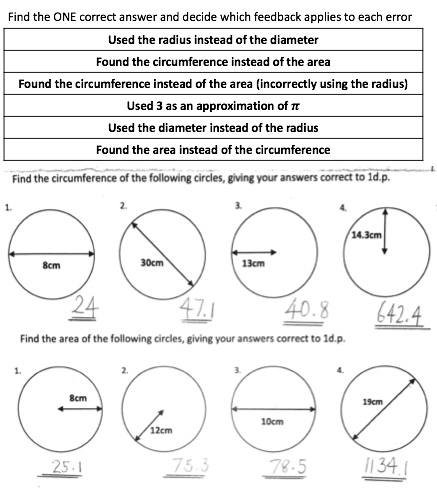
I used @_rhi_rhi PRET homework on area and circumference with my low attaining group. Many of them just gave answers and a lot of the answers were incorrect. It was frustrating that I needed to interpret the answers in order to work our what they had attempted to do.

After spending time looking at PixLs ‘thinking hard’ materials in our schools last extended, I thought I’d use an idea I had shared when giving students feedback. Instead of marking, correcting or even getting students to correct errors. You just tell them how many errors were made and ask them to find them

So the task below is the 8 questions from the PRET homework with 8 answers but only one is correct. Students are to find that answer and assign feedback to the other 7. Some feedback can be used more than once.

https://babbey-my.sharepoint.com/:p:/g/personal/konstantineh_barkingabbeyschool_co_uk/EYRNDBNM-cdFinGsrGrxOrEBaORlvXEA5frEs4QezloshA?e=Z283ea

circles-and-circle-properties-copy.pptx